
Call us now :08071930518
 Send Inquiry
 Send Inquiry
Flexible Jumper
Flexible Jumper Specification
- Tensile Strength
- High Tensile Strength
- Power
- High Conductivity for Power Transmission
- Voltage
- Up to 1100V
- Type
- Flexible Jumper
- Material
- Copper
- Weight
- Variable (as per specification)
- Surface
- Tinned Copper Finish
- Application
- Electrical Connections, Panel Boards, Switchgear, Transformers
- Feature
- Flexible, Durable, Corrosion Resistant
About Flexible Jumper
The Flexible Jumper is a cost effective alternative to etched flexible circuits. The jumpers connecting the top of the riser and the vessel are used to accommodate relative motion between the vessel and riser bundle. The jumper has found wide application as a connector between subsea structures. Jumpers are extremely flexible and resistant to abrasion, ozone, heat, moisture and oil. The jumper is offered by us for being used in various industries. Flexible Jumper is highly effective.
Versatility in Electrical Connections
Flexible Jumpers are custom-manufactured to adapt to various requirements in electrical panels, switchgear, transformers, and other critical power systems. They provide remarkable flexibility and conductivity while ensuring durability and a high degree of corrosion resistance, even in demanding environments.
Superior Material and Construction
Made from high-quality copper and finished with tinned copper for additional corrosion resistance, these jumpers can be configured with different terminals, insulation, and shapes. Their powerful tensile strength and adaptable design make them an optimal choice for secure and efficient power connections.
FAQs of Flexible Jumper:
Q: How are Flexible Jumpers installed in electrical equipment?
A: Flexible Jumpers can be installed using either lug terminals or welded terminals, depending on your application. The mounting process involves connecting each end of the jumper to the respective power source and electrical component, typically using screws or bolts for secure fastening.Q: What customization options are available for Flexible Jumpers?
A: You can specify the width, length, thickness (starting from 0.2 mm), connector type, insulation material (PVC or silicone), shape (strip, rope, or laminated), and current carrying capacity. This ensures a precise fit and optimal performance for your unique project requirements.Q: Where can Flexible Jumpers be used?
A: Flexible Jumpers are widely used in panel boards, switchgear, transformers, busbars, and various power transmission setups. Their flexibility and high conductivity make them suitable for industrial, commercial, and utility installations throughout India.Q: What is the manufacturing process for Flexible Jumpers?
A: Flexible Jumpers are manufactured by collecting high-quality copper strands or strips, assembling them according to the required configuration, adding terminals (either lug or welded), and optionally applying insulation. The completed jumper is then tinned for corrosion resistance and packaged as per customer requirements.Q: What are the key benefits of using Flexible Jumpers?
A: Flexible Jumpers offer high electrical conductivity, robust tensile strength, flexibility for easy routing, corrosion resistance due to the tinned copper finish, and the ability to operate at temperatures from -20C to +120C. Their customizability ensures they meet exact electrical and mechanical demands.Q: How does insulation improve Flexible Jumper performance?
A: Optional PVC or silicone insulation provides enhanced protection against short circuits, environmental exposure, and mechanical wear. Insulated jumpers are especially beneficial where electrical isolation and safety are critical.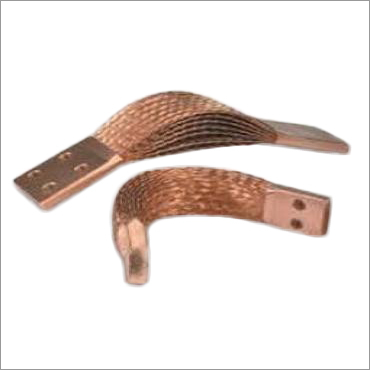
Tell us about your requirement

Price:
Quantity
Select Unit
- 50
- 100
- 200
- 250
- 500
- 1000+
Additional detail
Mobile number
Email


 Send Inquiry
Our Products
- Industrial Pumps
- Water Treatment Plant
- Induction Heating Machine
- Removal Plant
- Electrical Products
- Canalloy Bushes
- Cold Rolling Mill Spares
- Galvanizing Spare Units
- Mechanical Products
- Gold Silver Melting Furnace
- Non Sticking Anti Corrosive Paints
- Zinc Dross Reducing Flux
- Bearing Heaters
- Centrifugal Fan Blower
- Worm Wheel
- Mechanical Gear
- Ring Gear & Pinion
- Rolling Mill Rolls
- Copper Flexible Jumpers


20 B, Shyampukur Street,Kolkata - 700004, West Bengal, India

Mr Abhijit Nandan
(Manager)
Mobile :08071930518
 Send Inquiry
 Send SMS
Developed and Managed by Infocom Network Private Limited.
